Hedge Trimming in Staines

Hedge trimming in Staines is a practical way to keep boundary planting neat, balanced and manageable throughout the year. Our service focuses on shaping, reducing and tidying hedges so they support the look of a garden without becoming difficult to maintain. Whether you need a formal finish, a light seasonal cut or a more thorough restore-and-shape visit, we work with the hedge itself first and the surrounding space second, so the result is clean, controlled and proportionate.
We handle routine hedge cutting for domestic gardens, front boundaries, screening hedges and mixed planting that has grown unevenly. In many cases the work is about more than appearance: a well-trimmed hedge can improve light, keep paths clearer and prevent growth from spreading where it is not wanted. If you are looking for a straightforward local service and would like to request a quotation, we can discuss the hedge type, access and finish you want in plain terms.
Our approach is suited to hedges that need regular maintenance as well as those that have been left a little too long between cuts. We can work carefully around fences, gates, paving and planting beds, and we pay attention to the natural line of the hedge so it does not end up flat in the wrong places or too narrow at the base. For many customers, the main aim is simple: a tidy, healthy hedge that does its job without demanding constant attention.
Regular hedge maintenance
Regular hedge maintenance is the simplest way to keep growth under control and avoid a harder reduction later on. Hedges that are trimmed consistently are usually easier to shape, less likely to spread into paths or drives and more likely to keep a fuller appearance from bottom to top. We trim with the hedge’s natural habit in mind, which helps prevent uneven lines and sharp edges that can look forced in a domestic garden.
For many properties, maintenance work is seasonal rather than fixed to one exact pattern. Some hedges benefit from a light tidy after strong spring growth, while others need a more deliberate cut to keep them level along a boundary. We can work on formal hedges, soft garden screening and mixed varieties where the goal is a disciplined finish rather than an overly rigid outline. If you want to keep future work simpler, a regular trimming schedule is often the most practical place to start.
Trimmed hedges can also help support a clearer layout in the garden. Edges become easier to read, adjoining borders are less crowded and the hedge stops competing with nearby plants for space. Where a hedge is shared with a neighbour or visible from the street, consistent trimming can make a noticeable difference to the overall presentation. For more detail on the kind of work we cover, see our services overview, which sets out the main options in one place.
Shaping, reduction and tidying

Not every hedge needs the same treatment. Some only need the outer growth cut back, while others benefit from a fuller reshape because they have become top-heavy, widened over time or lost their clean outline. We can trim with a view to restoring proportion, improving symmetry and bringing a hedge back within the space it has available. This is especially useful where the hedge has outgrown a path, boundary or planting bed.
Shaping work can involve careful adjustments rather than a blunt reduction. A good cut often considers the face, top and sides separately so the hedge keeps a sensible profile. That may mean allowing more light at the top, easing pressure on the lower sections or narrowing overhang where growth is crowding nearby features. If you want to ask about a one-off tidy or a fuller reduction, our pricing and quotes page is a useful starting point before you request a quotation.
Where hedges have been neglected, the best result is often a controlled return to shape rather than an aggressive cut in one go. Some plants tolerate harder work better than others, so it is sensible to treat each hedge on its own merits. We can talk through the likely finish, the visual effect and any limitations that matter for the species involved. That way, the work can be planned around the hedge you actually have, not an idealised version of it.
Access, boundaries and finish
Hedge trimming often becomes more straightforward when access, boundaries and the intended finish are considered together. A hedge beside a narrow side return, for example, may need a different approach from one that is open on both sides. We also take care around shared fences, decorative edging and adjoining lawns so the cut line looks deliberate rather than rushed. Clear working space and a sensible plan help the trimming stay neat from start to finish.
When a hedge sits on or near a boundary, the main decision is usually how much growth to remove and how crisp the final line should be. Some customers prefer a sharper formal edge, while others want something softer that still looks tidy. Either can work well if it suits the hedge species and the garden layout. If your hedge has become uneven on one side, we can also discuss whether a light correction or a fuller re-shape is the better option.
Useful points to consider before booking:
- how much of the hedge needs attention, including top, sides or both
- whether access is straightforward or limited by gates, paving or narrow passages
- if the hedge is mainly for privacy, structure or decorative shape
- whether you want a light tidy, a reduction or a more precise finish
Garden clearance alongside hedge work

Some hedge trimming jobs reveal more than just the hedge itself. Fallen clippings, overgrown borders and crowded corners can make the whole area feel untidy even after the cut has been completed. Where needed, we can combine hedge work with broader garden clearance so the space around the hedge is easier to use and easier to maintain. This is helpful when growth has spilled into beds, paths or awkward corners.
Garden clearance can also support a neater result by making the shape of the hedge easier to see. If surrounding plants are encroaching, the hedge may look wider or messier than it really is. Clearing back excess growth first can make the trimming more accurate and the final outline more balanced. If you are comparing related services, our garden clearance page explains the wider clearing work we can provide alongside hedge maintenance.
For some gardens, combining tasks is simply more efficient than arranging separate visits. It can be useful when hedge trimmings, loose debris or old growth need to be removed as part of the same job. That said, we still keep the hedge itself central to the work, because a tidy garden is only useful if the main planted structure has been properly shaped and maintained. The result should feel intentional, not merely cleared.
Garden maintenance and seasonal care
Hedge trimming often sits naturally within ongoing garden maintenance. A hedge that is cut at the right time and at the right frequency is usually easier to keep in shape than one that is left to surge forward between visits. Seasonal care may involve lighter cuts during periods of active growth and more careful attention when the hedge needs to hold its outline through colder months. We can discuss what suits your planting and your preferred appearance.
This wider maintenance approach is useful when hedges form part of a larger garden scheme rather than standing alone. In that setting, the hedge has to work with lawns, beds, trees and paths, so the finish matters as much as the cut itself. If your outdoor space needs more than one kind of upkeep, our garden maintenance page gives a broader view of the regular care we can support. It can help when you want a more joined-up plan for the garden.
For straightforward hedge work, the aim is still the same: neat lines, sensible proportions and growth kept in check. Regular attention can make the hedge look fuller and more controlled at the same time, because the plant is not forced into repeated heavy recovery. That balance is especially important on visible boundaries, where the hedge contributes to the overall look of the property as well as its privacy.
Hedge types and trimming methods
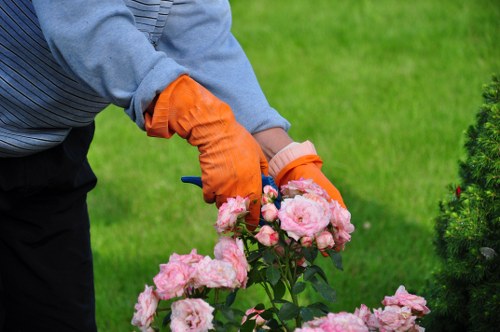
Different hedge types respond in different ways to trimming, so method matters. A dense evergreen hedge, a mixed boundary hedge and a softer ornamental hedge will not all benefit from the same cut. Some need precise outer shaping, while others respond better to a lighter reduction that protects the hedge’s structure. We trim with the growth habit in mind, aiming for a result that is tidy without being unnatural.
One of the key choices is whether the hedge should be narrower at the top, broader at the base or kept as a clean vertical wall. Each shape has different visual and practical effects. A slightly tapered profile can help light reach the lower sections, while a formal straight-sided hedge may suit a more structured garden. If you want to understand the broader range of landscaping work that can sit around this kind of task, our landscape gardening page outlines adjacent services.
In some cases, a hedge cut is part of a longer-term plan rather than a one-off tidy. That might mean restoring a neglected hedge over time or keeping a new planting line under control while it establishes. The most useful method depends on how the hedge is growing now, how much room it has and how you want it to look after the work is complete. Good trimming respects those limits instead of trying to make every hedge behave in exactly the same way.
Supporting the wider garden layout
A hedge can frame a garden, soften a boundary or provide screening, but it only performs well when it suits the rest of the layout. Trimming is therefore about more than reducing height or width. It can shape how paths feel, how much light reaches the garden and how clearly the space is divided. Careful hedge work can improve the sense of order without making the planting feel stripped back or over-managed.
Where the hedge forms part of a larger outdoor design, other features may also need attention to keep the setting coherent. For example, nearby lawns, paved areas or timber features can make the hedge appear more dominant if they are not maintained in step. If decking is part of your garden layout, our decking services page may be useful when considering related improvement work. Keeping the elements in proportion is often what makes the space feel finished.
There is also a practical side to hedge shaping in shared or narrow spaces. A hedge that leans too far into a route or overhangs a boundary can make the garden harder to use. Trimming restores breathing room and makes the layout easier to read. It is not simply a cosmetic job; it is part of how the garden functions from one end to the other.
About Staines
Staines-upon-Thames is a town in Surrey on a long-established crossing point of the River Thames, and its history is closely tied to river traffic, routes in and out of London, and the development of nearby settlements. The town’s name reflects that river connection, and its modern identity is still shaped by the Thames-side setting. Bridges, riverside paths and waterside views remain central to how many people experience the place, while the river itself has helped define the town’s geography and movement patterns for centuries. The area is not a single uniform centre but a mix of streets, residential edges and open spaces that sit within the wider town. As with many Thames-side towns, the built environment includes a blend of older structures, later commercial development and residential growth that reflects changing use over time.
The town centre has undergone substantial redevelopment in recent years, but the surrounding landscape still gives Staines a recognisable character. Local green spaces, the river corridor and nearby recreational routes provide a contrast to the busier urban core. The River Thames, in particular, links the town to a wider network of walks, boating activity and waterside landmarks. Staines also sits within a broader area of historic parishes and settlements in north-west Surrey, so its identity has evolved through both local continuity and regional change. This combination of river, transport and suburban development gives the town a distinctive structure, where open water, roads and built-up areas sit in close proximity rather than in separate zones.
Architecturally, the town includes a mix of commercial buildings, housing from different periods and public spaces that have adapted to modern use while retaining traces of earlier phases. The riverside setting is a particularly important part of that character, with the Thames providing a visual and cultural reference point throughout the year. Parks and green corridors offer room for walking and everyday recreation, while the centre supports shops, services and civic activity. Taken together, these features make Staines a place defined by movement, access and the meeting point between town life and the river landscape.
Requesting a quotation

When you are ready to request a quotation, it helps to describe the hedge in straightforward terms: its approximate length, height, whether it needs a tidy or a reduction and whether access is easy or restricted. If you have a preferred finish, such as a sharper formal line or a softer garden shape, that is useful to mention too. These details help us match the scope of the work to the hedge in front of us, rather than to a generic description of hedge trimming.
It is also sensible to note any relevant constraints, such as awkward corners, nearby planting or sections that have grown more heavily than others. A clear outline of the job tends to make the quotation process simpler and more accurate. If you would like to compare hedge work with other outdoor tasks, our landscaping page shows the wider type of garden improvements we can discuss alongside trimming. Contact us to request a quotation for hedge trimming in Staines.
We aim to keep the process clear, practical and focused on the work that matters. If your hedge needs regular upkeep, a one-off tidy or a more substantial reshape, we can talk through the likely approach and agree the right scope before anything is arranged. Start with the hedge, the finish and the access, and the quotation can follow naturally from there.