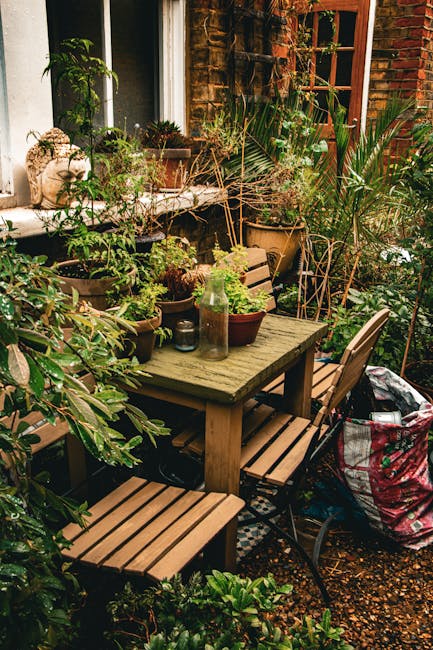
Gardeners near Staines station insider tips for small yards
If you live close to Staines station and your garden feels more like a slim outdoor room than a full-size plot, you are not alone. Small yards can be brilliant, but they also expose every awkward corner, every patch of shade, and every maintenance headache. That is exactly where Gardeners near Staines station insider tips for small yards become genuinely useful: not as abstract theory, but as practical, local know-how that helps a compact space look bigger, work harder, and feel easier to live with.
In this guide, we will walk through how experienced gardeners approach tight urban and suburban gardens near the station, what actually makes the biggest difference, and which decisions are worth your time. You will find space-saving ideas, maintenance shortcuts, planting guidance, and a few honest warnings too. Truth be told, a small yard can be easier to improve than a big one. It just needs a sharper plan.
Table of Contents
- Why this matters for small yards near Staines station
- How the approach works in practice
- Key benefits and practical advantages
- Who this is for and when it makes sense
- Step-by-step guidance for a better small yard
- Expert tips for better results
- Common mistakes to avoid
- Tools, resources and recommendations
- Law, compliance, standards and best practice
- Options, methods and comparison table
- Case study / real-world example
- Practical checklist
- Conclusion
- Frequently asked questions
Why Gardeners near Staines station insider tips for small yards Matters
Small yards are unforgiving in a useful way. Every choice shows up quickly. If the layout is clumsy, you feel it every time you open the back door. If the planting is too busy, the space can look crowded by midday. If drainage is poor, one wet week can turn a tidy yard into a muddy nuisance. That is why local gardening advice matters so much here.
Near Staines station, many gardens sit in practical, lived-in spaces: terraces, compact semis, townhouses, courtyards, and narrow side returns. Some get full sun for a few hours and then slip into shade from nearby buildings or fences. Others face wind tunnels or tricky overlooked boundaries. A gardener who understands these patterns can make a much bigger difference than a generic "small garden makeover" package.
There is also a lifestyle angle. If you commute from Staines station, you probably want a garden that does not demand constant fuss. You want planting that still looks good after a busy week. You want surfaces that are easy to keep clean. You want a layout that works on a Thursday evening when you have ten minutes and a cup of tea, not just on a rare free Sunday. That is the real value here.
If you are exploring broader help as well, it can be useful to look at gardening services in Staines upon Thames or the wider local gardening support available so you can compare what matches your space and routine.
How Gardeners near Staines station insider tips for small yards Works
The best approach to a small yard is not to cram in more features. It is to make the space feel intentional. Experienced gardeners usually start by looking at function first: where you walk, where you sit, where water collects, where the sun hits, and what you can realistically maintain.
In practice, the process usually follows a simple logic:
- Measure the real usable space. Not just the fence-to-fence dimensions, but the movement space, storage access, bin routes, and door swing.
- Map the light. Small gardens can have weird light patterns. A patch may get bright morning sun and then vanish into shadow by 2pm.
- Sort the structure. Good gardeners use edges, levels, planters, and screens to create order before thinking about flowers.
- Choose plants for the conditions. A plant that looks lovely in a nursery can behave badly in a cramped, hot, dry yard. Small space, different rules.
- Plan maintenance early. If you cannot water, prune, and tidy it easily, it will start looking tired fast. Fast.
There is a subtle but important idea here: small-yard gardening near Staines station is not mainly about size. It is about efficiency. A well-chosen raised bed, a clean path line, or one strong evergreen can make a courtyard feel far calmer than five extra pots ever will. To be fair, that is where a lot of the transformation lives.
For practical planning help, many homeowners also like reading about garden design ideas that work in real life before they decide how much of the space should be planting, paving, or seating.
Key Benefits and Practical Advantages
The biggest win is not just appearance. It is usability. A compact garden done well becomes a genuinely pleasant extension of the home, even when the weather is being typically British about everything.
- More apparent space: Better lines, restrained planting, and the right focal points can make a small yard read larger.
- Less maintenance stress: Fewer but better-selected plants usually mean less tidying, fewer failures, and less guesswork.
- Improved drainage and cleanliness: A smart surface plan helps prevent puddles and mud, which matter a lot in narrow spaces.
- Better year-round interest: You do not need a jungle. You need structure, seasonal change, and a few dependable features.
- More privacy: Careful screening can soften overlooking from neighbouring properties without making the yard feel boxed in.
- Higher everyday enjoyment: A space you can sit in, step into, and use without thinking becomes a habit, not a project.
There is another benefit people often underestimate: good small-yard work can reduce decision fatigue. If the garden is organised properly, you do not stand at the back door every weekend wondering where to begin. That may sound minor. It is not minor. It is the difference between a garden you enjoy and one you keep putting off.
Who This Is For and When It Makes Sense
This approach suits anyone with a compact outdoor space near the station who wants sensible improvements rather than a dramatic overhaul for the sake of it. It is especially useful if you are trying to balance good looks with low maintenance.
You may benefit from local gardening help if you are:
- living in a terrace, maisonette, flat with a courtyard, or a small rear garden;
- short on time because of commuting, shift work, or family routines;
- wanting to make a rental property look cared for without overinvesting;
- trying to improve drainage, privacy, or boundaries in a tight layout;
- planning to sell and wanting the garden to feel neat and usable;
- simply tired of a yard that never quite feels finished.
It also makes sense if you have already tried the "just add more plants" route and found that it made things busier, not better. That happens all the time. A small garden can swallow a dozen pots and still look unfinished. The answer is usually structure, not clutter.
If you need help with ongoing care rather than a one-off tidy-up, a page on garden maintenance services can be a useful next stop. It helps to know what support is available before you decide what to do yourself.
Step-by-Step Guidance
If you are improving a small yard near Staines station, keep the process calm and practical. Here is the sequence most experienced gardeners would follow.
1. Clear the visual noise
Start by removing the things that make the garden feel smaller than it is. Broken pots, oversized furniture, random storage, too many different materials, and anything unused for months. A yard can look instantly better simply because it is less busy.
2. Define the main purpose
Ask yourself what the garden must do. Is it mainly for sitting out? Growing herbs? Keeping a bit of lawn? Safe space for children? Easy dog access? You rarely have space for everything, so the garden should have one clear job first.
3. Create a simple layout
Use one or two strong zones rather than a dozen tiny features. In a very compact space, the best layouts are often the simplest. A straight path, one seating area, one planted border, one storage point. Clean lines help a lot.
4. Improve the hard landscaping
Surfaces matter more than people expect. If slabs, stepping stones, decking, or gravel are poorly chosen, the whole garden looks fiddly. A good gardener will think about slip resistance, cleaning, drainage, and how the surface sits next to the house.
5. Choose plants by behaviour, not just beauty
Pick plants that stay tidy, suit the available light, and do not outgrow the space too quickly. Compact shrubs, vertical climbers, pollinator-friendly perennials, and restrained grasses often work well. A small yard does not need a plant collection. It needs dependable performers.
6. Build height instead of width
Use walls, trellis, obelisks, and narrow trees where appropriate. Vertical interest draws the eye up, which helps the garden feel less cramped. It can also soften blank fences and make the boundary feel less hard.
7. Plan for maintenance from day one
Leave space to reach pots, trim edges, and water safely. If you cannot get to the back of a bed without climbing over something, the design is already working against you. Annoying little detail? Maybe. But it matters.
8. Review after one season
Small gardens reveal their strengths and weaknesses quickly. After spring and summer, you will know what looks good, what gets too much sun, and what needs replacing. The second pass is where a garden starts feeling mature.
Expert Tips for Better Results
Here is where local experience really earns its keep. These are the sorts of choices that make small gardens feel thoughtful rather than overworked.
Use repetition sparingly. Repeating the same pot, plant, or material three times can create calm. Repeating everything ten times creates a catalogue, not a garden. One strong colour palette is usually enough.
Choose a limited material set. Two paving tones, one timber finish, and one metal accent often look far better than a jumble of styles. In compact spaces, consistency reads as quality.
Go for multi-season plants. Plants that offer structure in winter, foliage in spring, flowers in summer, and colour in autumn are especially useful where space is tight. You need every square metre to earn its keep.
Don't hide every boundary. It is tempting to screen everything. But complete enclosure can make a small yard feel boxed in. Sometimes a partial screen or a well-placed climber is enough.
Think in layers. A good small yard often has ground level, mid-level, and vertical interest. That does not mean lots of stuff. It means a sense of depth. A few plants can do this beautifully if they are placed well.
Use containers as flexible tools. Pots are not a last resort. They are excellent for adjusting height, testing plants, and softening hard surfaces. Just do not let the pots become the whole show. You know the look. A bit too many and suddenly you are gardening around the garden.
If you are comparing service styles, it may also help to look at landscaping support for small outdoor spaces alongside routine garden care. Some yards need both, and the sequence matters.
Expert summary: In a small yard, the best gardeners do less, but they do it better. They simplify the layout, respect the light, choose plants that behave, and leave you with a space that feels easy to live with rather than hard to maintain.
Common Mistakes to Avoid
Small gardens punish rushed decisions. That is not bad news, just honest news. Avoid these common traps and you are already ahead of the game.
- Over-planting: Too many species can make a yard feel cramped and chaotic.
- Ignoring drainage: A beautiful planting plan does not help if the soil stays sodden.
- Using furniture that is too large: One chunky table can swallow half the space.
- Choosing fast-growing plants without a plan: They can overtake paths, fences, and each other.
- Mixing too many materials: Brick, slate, gravel, painted wood, concrete, metal... it becomes visually noisy quickly.
- Forgetting access: Can you actually open the shed, reach the tap, or mow the patch you left yourself?
- Chasing trends over practicality: A garden that looks good on a mood board may be awkward on a wet Tuesday evening.
A quiet mistake that comes up often is not leaving enough breathing room around planting. People assume every empty patch must be filled. It does not. A little open space gives the eye somewhere to rest. That is what makes a small yard feel thoughtful instead of busy.
Tools, Resources and Recommendations
You do not need a van full of kit to improve a compact garden, but the right tools make the work neater and faster. For ongoing care, local gardeners near Staines station often rely on a simple, reliable set rather than anything flashy.
| Tool or resource | Why it helps in a small yard | Practical note |
|---|---|---|
| Hand trowel and hand fork | Useful for tight borders, containers, and precise planting | Choose sturdy tools with comfortable grips |
| Bypass secateurs | Clean cuts for shrubs, climbers, and perennials | Keep them sharp; blunt cuts damage stems |
| Compact watering can or hose attachment | Makes daily watering easier in narrow spaces | Look for controlled flow to avoid runoff |
| Weed-suppressing mulch | Reduces tidy-up time and helps retain moisture | Match the mulch to your planting style |
| Lightweight furniture | Better for changing layouts and seasonal flexibility | Foldable pieces can be a smart choice |
| Design consultation | Helpful when layout, drainage, or privacy need a plan | Especially useful before buying materials |
For broader support, browsing planting services and border ideas can be helpful if your main issue is weak planting rather than a full redesign. If privacy or boundary issues are part of the picture, fencing solutions may also be worth a look.
And if you want to understand how different jobs are typically grouped, the page on garden clearance support can be useful before a tidy-up or reset. Sometimes you need a clean slate before anything else makes sense.
Law, Compliance, Standards and Best Practice
Most small-yard work is straightforward, but a few practical rules and norms are worth keeping in mind, especially in built-up areas around station-adjacent homes.
Boundary and access considerations: If work affects shared fences, neighbouring walls, or access routes, it is wise to check responsibilities before starting. In terraces and close-packed streets, that avoids friction later. A careful gardener will usually flag this early.
Waste handling: Green waste, rubble, and old timber should be disposed of responsibly. In the UK, garden waste disposal typically follows local council rules or licensed waste carriers. If a contractor is removing waste, it is sensible to ask how they handle it.
Trees and larger shrubs: Some trees may be subject to preservation controls or planning constraints, depending on location and status. That does not mean you cannot manage them, but it does mean you should not assume pruning is always simple. If there is any doubt, get proper advice before cutting.
Safety and good practice: Good garden work should avoid unnecessary damage to drainage, paving, walls, and utility access points. Any reputable gardener will treat these carefully. Small yards are tight, so careful handling is part of the job, not a bonus.
Neighbourly good practice: In compact urban settings, timing matters. Loud machinery, access over shared paths, and overspray from cleaning can all cause annoyance. A considerate approach goes a long way. Makes life easier for everyone, really.
Where complex work is involved, especially anything structural or involving retaining levels, it may be sensible to seek professional input rather than guessing. That is not overkill. It is common sense.
Options, Methods, or Comparison Table
There is more than one way to improve a small yard. The right method depends on budget, how much maintenance you want, and whether the space needs a quick refresh or a deeper redesign.
| Approach | Best for | Pros | Trade-offs |
|---|---|---|---|
| Seasonal tidy and planting refresh | Gardens that are mostly fine but feel tired | Fast, affordable, low disruption | Won't fix layout or drainage issues |
| Maintenance-focused care plan | Busy homeowners who need it to stay neat | Keeps the space under control through the year | Less dramatic visual change |
| Small garden redesign | Cramped yards with poor flow or awkward layout | Improves usability and appearance together | More planning, more cost, more decisions |
| Hard landscaping-led upgrade | Spaces needing better surfaces, levels, or access | Strong structure and long-term practicality | Less flexible once installed |
| Planting-led soft makeover | Yards that already function but need life and character | More natural feel, seasonal interest, easier to evolve | Needs the right plant choices and maintenance |
As a rule, a purely decorative fix is rarely enough for a difficult small yard. If the bones are wrong, the plants will not save it. If the bones are good, even a modest planting scheme can look very polished.
Case Study or Real-World Example
A fairly typical small yard near the station might be a narrow rear garden behind a mid-terrace home. The owner wants somewhere to sit after work, room for a few pots, and a bit more privacy from neighbouring windows. The space is usable, but it feels cramped and slightly chaotic, with tired paving and a couple of shrubs that have simply become too large for the setting.
The first move is not adding more. It is taking away. Remove the clutter, cut back the overgrown planting, and decide on one main sitting area rather than trying to squeeze in a bench, a table, and multiple planters. Then introduce a simple planting rhythm: one evergreen framework plant, a climber on the fence, and a restrained seasonal layer in pots.
In many cases, that sort of reset changes the whole feel of the space. Suddenly the yard has edges. It has breathing room. It feels deliberate. A neighbour might not even be able to say exactly what changed, only that it now looks cared for.
There was one small job, nothing dramatic, where the owner said the garden felt like "a corridor with plants." Fair description, to be honest. By simplifying the path line, replacing one oversized container, and shifting to lighter planting near the house, the yard felt longer and less pinched. Not bigger, exactly. Just less awkward. Which, in a small space, is often the real win.
Practical Checklist
Use this checklist before you commit to any work or booking. It helps keep the project grounded.
- Have I measured the usable space, not just the boundary lines?
- Do I know where the sun, shade, and wind hit during the day?
- Is the main purpose of the yard clear?
- Have I identified any drainage problems or standing water?
- Are the current plants too large, too messy, or poorly suited?
- Have I kept the material palette simple?
- Is there enough space to water, prune, and clean comfortably?
- Do I need privacy screening, and if so, how much?
- Have I checked access, waste removal, and any shared boundary issues?
- Would a maintenance plan make more sense than a one-off change?
If you can tick most of these off, you are already in a much stronger position. If not, that is fine too. At least you know where the weak spots are, and that makes the next step much easier.
Conclusion
Small gardens near Staines station do not need to be complicated to be good. In fact, the best ones usually are not. They are clear, practical, and quietly well considered. They use structure to create calm, planting to soften the hard edges, and sensible maintenance to keep things from drifting into chaos.
If you take one thing from this guide, let it be this: a compact yard rewards restraint. You do not need to fill every corner. You need to make every corner earn its place. That is the real insider tip, if we are being honest.
When the layout works and the planting suits the space, even a tiny yard can feel like a proper retreat. Not grand. Just right. And sometimes that is far better.
Get a free quote today and see how much you can save.
Frequently Asked Questions
What do gardeners near Staines station usually do first in a small yard?
They usually start by clearing clutter, checking drainage, and mapping how the space is actually used. That gives a practical foundation before any planting or redesign begins.
How can a small yard look bigger without major building work?
Use simple lines, fewer materials, vertical planting, and restrained colour choices. A clean layout and a limited material palette often create the biggest visual lift.
Are pots a good idea in a compact garden?
Yes, provided they are used thoughtfully. Pots are excellent for flexibility and height, but too many can make a yard feel busy and reduce the sense of space.
What plants work well in small gardens near Staines station?
Plants that stay relatively compact, tolerate local light conditions, and offer multi-season interest are usually best. Climbers, small evergreens, and tidy perennials often perform well.
How often should a small yard be maintained?
That depends on the design and planting, but small yards usually benefit from regular light maintenance rather than occasional heavy work. Small, steady jobs are easier to keep on top of.
Can a small garden still have privacy?
Absolutely. Partial screening, trellis, climbers, and careful positioning of taller plants can improve privacy without making the space feel boxed in.
What is the biggest mistake people make with small yards?
Overfilling them. People often add too many plants, too much furniture, or too many materials, and the garden ends up feeling tighter rather than better.
Is landscaping worth it for a very small garden?
It can be, especially if the layout, surfaces, or drainage are the main problems. Even modest landscaping changes can make a small yard far easier to use.
How do I choose between maintenance and redesign?
If the garden basically works but looks tired, maintenance may be enough. If the layout is awkward, access is poor, or drainage is a problem, redesign is usually the better long-term fix.
Do I need to worry about local rules before pruning trees or removing waste?
Yes, in a sensible way. Some trees may have protections, and waste should be handled according to local council rules or licensed disposal requirements. A good gardener will be careful about both.
How do I know if a gardener understands small spaces properly?
Ask how they would improve function first, not just appearance. If they talk about layout, light, access, maintenance, and proportion, that is a good sign they understand compact gardens.
What should I ask for in a quote?
Ask what is included, whether waste removal is covered, how materials are handled, what maintenance will be needed afterwards, and whether the quote accounts for access or awkward corners. Clarity at the start saves stress later.
Can a small yard still support wildlife-friendly planting?
Yes. Even a compact space can support pollinators and birds with the right mix of flowers, shrubs, shelter, and water. You do not need a huge plot to make a difference.
What is the best next step if I am unsure where to start?
Begin with a short assessment of the space: light, drainage, layout, and maintenance. If that feels too vague, speak to a local gardener who works with small yards and ask for a practical site visit. A clear first conversation can save a lot of trial and error.